
10 Facts About Smiles and Dentistry
Discover 10 engaging facts about smiles and dentistry, from boosting mood to making you look younger, with tips for achieving healthy, radiant smile
Dental insights
Explore the benefits of AirFlow teeth cleaning: biofilm and surface-stain removal, comfort considerations, and how air polishing works alongside scaling and gum care.

What can AirFlow teeth cleaning do that your toothbrush cannot? At Westcoast Smile in Kitsilano, Vancouver, AIRFLOW is used to remove dental biofilm and many external stains as part of professional hygiene care. This guide explains its benefits, its limits and the questions worth asking before your appointment. For treatment information, visit our AIRFLOW dental cleaning service page.
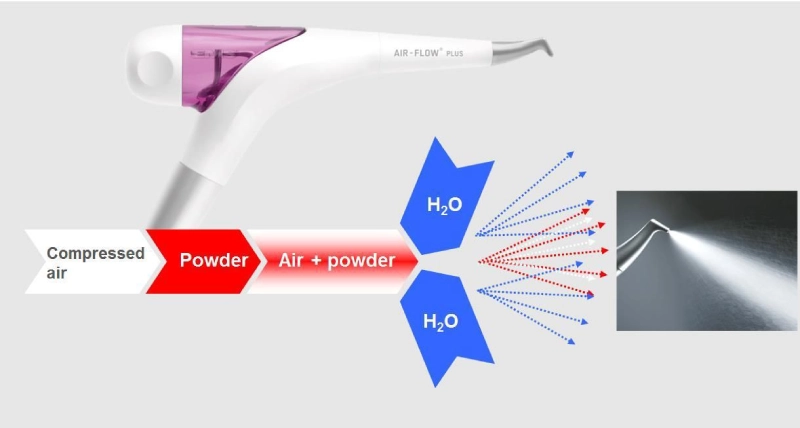
AIRFLOW delivers a controlled spray of air, water and suitable fine powder to remove soft bacterial plaque, also called biofilm, and surface stains. It is an air-polishing technology, not a replacement for the full hygiene assessment. Hard tartar is a different kind of deposit; remaining established calculus may need ultrasonic or hand scaling.
Biofilm forms again after cleaning, so professional care and daily home care have complementary roles. Repeated gum bleeding, persistent bad breath and changes in gum health warrant an assessment rather than being treated as cosmetic concerns. Read about daily prevention and gum-health warning signs.
Image Source: https://www.ems-dental.com/en/original-air-flow-treatment/
Biofilm is soft bacterial plaque. Calculus, also called tartar, is mineralized deposit. AIRFLOW focuses on biofilm and external stains; suitable powders may also remove early calculus, while remaining established tartar needs appropriate instrumentation. Removing stains is therefore only one part of assessing and caring for teeth and gums.
In Guided Biofilm Therapy, disclosure helps make plaque visible before targeted cleaning. The clinician then checks for remaining deposits and plans follow-up. Read our hygiene appointment guide for how assessment and prevention fit around the technology.
The AirFlow technology harnesses the power of:
The air-water-powder spray helps lift biofilm and external staining from appropriate oral surfaces. Powder, water temperature, settings and technique matter. A professional selects them for your teeth, restorations and gum condition rather than assuming all air-polishing treatments are interchangeable.
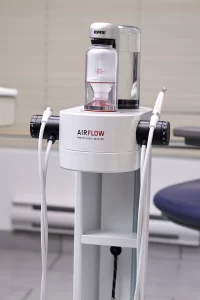
1. Comfort that can be adjusted. Warm water and suitable settings may make cleaning more comfortable, especially for people who dislike cold water or polishing sensations. Comfort varies with sensitivity, inflammation and the treatment needed, so tell your hygienist if an area is uncomfortable.
2. Efficient biofilm and stain removal. AIRFLOW can remove biofilm from areas with complex contours and reduce some polishing steps. The length of your visit still depends on assessment, deposits, gum health and any additional care. A short device-treatment time should not be confused with the time for a complete hygiene appointment.
3. Access around difficult areas. Crowded teeth, orthodontic attachments and dental work can create places that are harder to clean. Appropriate air polishing may help remove biofilm from these areas, but it does not replace diagnosis, home-care instruction or treatment of active disease.
4. Options for implants and restorations. Suitable powders and techniques can be used around selected dental implants, crowns, veneers and orthodontic appliances. The right approach depends on the surface, gum condition and manufacturer’s instructions. Not every powder or instrument is appropriate for every material.
5. Part of a gum-health plan. Biofilm removal supports plaque control, but AIRFLOW powder does not make a mouth permanently bacteria-free or guarantee prevention of gingivitis or periodontitis. Gum assessment, appropriate scaling, treatment where needed and continued home care remain important.
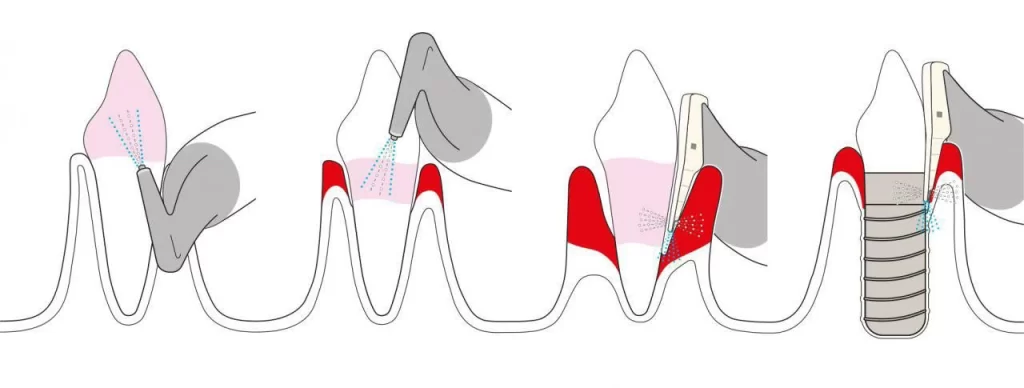
Image Source: https://www.ems-dental.com/en/original-air-flow-treatment/
Powder choice is a clinical decision. Fine erythritol-based powder is used in some AIRFLOW applications, while other powders have different indications. Tell the team about allergies and health conditions; do not assume that a particular powder or flavour is suitable without assessment.
What if my teeth are sensitive? Sensitivity can come from exposed roots, inflammation, decay or other causes. AIRFLOW may be comfortable for some patients, but it cannot be expected to eliminate sensitivity. Tell your hygienist before cleaning so the cause, technique and comfort options can be considered.
Who needs an individual suitability check? Your medical and dental history, allergies, breathing conditions, restorations and current symptoms should be reviewed before treatment. Air polishing uses a pressurized spray, so professional screening and appropriate technique matter. Age alone is not a reason to label someone suitable or unsuitable.
Stain removal is different from whitening. Removing tea, coffee or tobacco stains may reveal a brighter-looking natural tooth surface. AIRFLOW does not bleach the underlying tooth shade, and it is not a treatment for all enamel discolouration. Our team can explain when separate teeth whitening or another assessment is more appropriate.
Ready to explore whether AIRFLOW fits your needs? Our AIRFLOW cleaning service page explains your visit, comfort considerations and how to request an appointment in Kitsilano, Vancouver.
Request an appointment with Westcoast Smile Dental in Kitsilano, Vancouver.