
Dental Implants Vancouver & Kitsilano
Review the clinic’s implant treatment approach, candidacy, planning process and consultation pathway.
Dental implant patient guide
The phrase “types of dental implants” can mean different things: how an implant is placed, what it is made from, or how many teeth the restoration replaces. This guide separates those categories so the options are easier to understand.
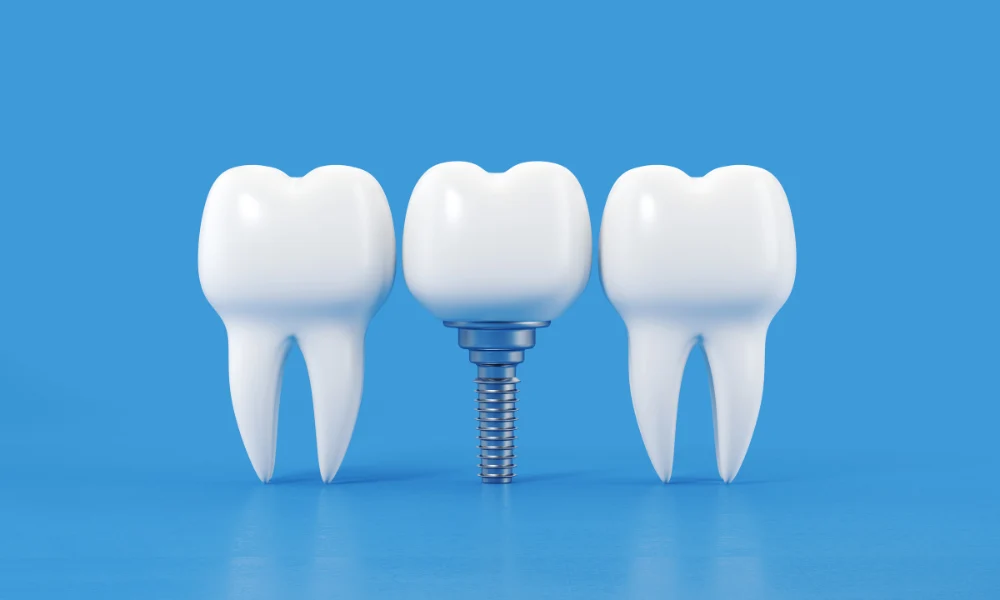
There is no single universal list of “three” or “four” implant types because different sources classify implants in different ways. By placement, professional sources commonly describe endosteal and subperiosteal implants, while dental literature may also include transosteal implants. By tooth-replacement need, patients are more likely to hear about single-tooth implants, implant-supported bridges, full-arch fixed restorations and implant-retained overdentures.
If you are comparing treatment rather than terminology, see our Dental Implants in Vancouver & Kitsilano service page. This article is educational and does not determine whether a particular implant approach is appropriate for you.
The difference usually comes from what is being classified. An implant fixture is the component placed in or around the jawbone. A crown, bridge or denture is the restoration that attaches to implants to replace visible teeth. Some lists classify the implant fixture itself; others classify the completed treatment according to how many teeth are being replaced.
The American Academy of Periodontology describes endosteal and subperiosteal implant categories and separately explains single-tooth, multiple-tooth and full-mouth implant procedures. Clinical references such as NCBI Bookshelf may also list transosteal implants as a third placement category. Patient-facing sources such as Cleveland Clinic often organize options by the restoration: single-tooth replacement, implant bridge and full-arch treatment.
That is why a search for “the three types of dental implants” and a search for “the four types of implants” can both return reasonable but different lists. The important question for a patient is not the number on the list; it is which treatment design fits the missing teeth, available bone, gum health, bite and restorative goals.
Endosteal implants are placed within the jawbone and are the most common modern implant category. A root-form implant is typically used as a foundation for a crown, bridge or larger implant-supported restoration. The final treatment still depends on the number of teeth being replaced and the condition of the implant site.
Subperiosteal implants are positioned on top of the jawbone beneath the gum tissue rather than being placed into the bone in the same way as an endosteal implant. They are much less common in routine dentistry and may be considered only in selected situations. Modern treatment planning usually evaluates whether conventional endosteal treatment, grafting, another restorative option or referral is more appropriate first.
Transosteal implants pass through the jawbone and appear in traditional clinical classifications as a third placement category. They are not a routine option in contemporary general implant treatment. Their presence in older or academic classifications is one reason some resources refer to “three types” of dental implants.
Zygomatic implants are a specialized approach used by appropriately trained surgical teams in selected cases of severe upper-jaw bone loss. They anchor in the cheekbone rather than following a routine endosteal placement in the upper jaw. They should not be treated as a standard choice for most patients, and a clinic may refer complex cases when specialized surgical care is required.
For most patients, this is the more practical way to compare implant treatment because it describes what the implants are being asked to support.
One implant can support a single crown when one tooth is missing and the surrounding conditions are suitable. This can replace the missing-tooth foundation without preparing neighbouring teeth solely to support a conventional bridge.
When several neighbouring teeth are missing, two or more implants may support a bridge that replaces multiple teeth. The number and position of implants depend on the span being restored, available bone, bite forces and the restorative plan.
A full arch of missing or non-restorable teeth may sometimes be replaced with a fixed restoration supported by multiple implants. Patient-facing clinical resources commonly describe full-arch designs supported by several implants rather than one implant for every missing tooth. The exact number and distribution are treatment-planning decisions, not a universal formula.
An implant-retained overdenture is removable but uses implants to improve retention and stability compared with a conventional removable denture. It is a different restorative design from a fixed full-arch bridge, even though both use implants for support.
All-on-4 is better understood as a full-arch treatment concept rather than a separate biological implant category. It describes a treatment design in which a full arch is supported by four strategically positioned implants. Other full-arch designs may use a different number of implants depending on anatomy, restorative requirements and the clinical plan.
If a patient is comparing full-arch options, the useful questions are not simply “four implants or more?” but also whether the teeth are fixed or removable, what bone and tissue support are available, how the bite will be managed, and what maintenance will be required. Westcoast Smile provides full-arch treatment, including All-on-4; our All-on-4 gallery offers a clinic example. Your dentist assesses the appropriate design for your mouth.
Mini dental implants are smaller-diameter implants. They may be used in selected situations, including some denture-retention applications, but being smaller does not automatically make them the better choice when bone is limited. Implant diameter, available bone, loading, restoration design and long-term maintenance all need to be considered together.
A consultation should therefore focus on the treatment goal and anatomy rather than assuming a mini implant is simply a less invasive substitute for a conventional implant.
Implants can also be described by material. Titanium and titanium alloys are widely used for endosteal implants. Ceramic implant systems, commonly based on zirconia, are another option in selected cases. Material choice is separate from the question of whether the implant will support one crown, a bridge or a full arch.
The appropriate system depends on the clinical situation, the restorative components available, tissue considerations and the dentist’s treatment plan. A material should not be selected from a general online comparison alone.
The “best type” of implant is not determined by a universal ranking. Treatment planning considers the missing-tooth pattern and the condition of the mouth as a whole.
At Westcoast Smile, implant planning is coordinated through our Kitsilano clinic. For assessment, treatment choices and follow-up at our Vancouver clinic in Kitsilano, visit Dental Implants in Vancouver & Kitsilano.
For more detail on candidacy, treatment stages and recovery, read our Dental Implant Patient Guide. For pricing factors, see Dental Implants Cost.
This guide was refreshed using current patient and clinical reference material from the American Academy of Periodontology, Cleveland Clinic and NCBI Bookshelf. These sources use different classification frameworks, which is why this article separates implant placement from restoration type.
Request an appointment at Westcoast Smile Dental in Kitsilano, Vancouver, to discuss which tooth-replacement approaches may be appropriate for your situation.