
Dental Implant Patient Guide
Understand candidacy, treatment stages, recovery, risks and long-term care before deciding whether implants may be right for you.
Dental implant care in Vancouver & Kitsilano
Replace missing teeth with a personalized implant plan at our Kitsilano clinic, serving patients from across Vancouver. We combine careful diagnosis, implant placement, restoration and long-term follow-up in one coordinated treatment pathway.
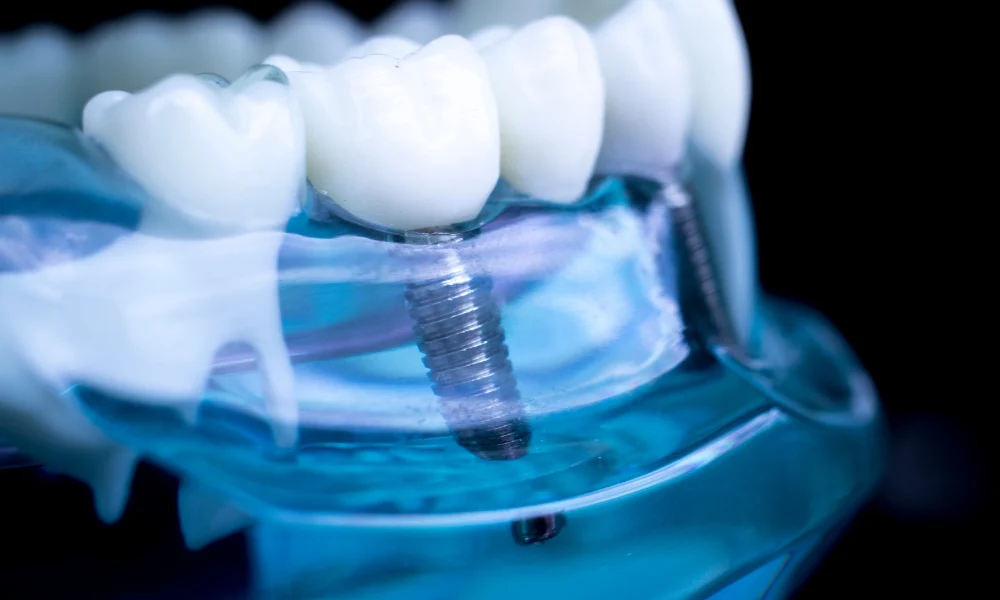
Dental implants replace missing teeth by supporting a crown, bridge or other restoration from an implant placed in the jaw. For many patients, this creates a stable option that feels more like a natural tooth than a removable replacement. At Westcoast Smile Dental, implant treatment is planned at our Kitsilano clinic for patients from the neighbourhood and across Vancouver.
The right plan depends on more than the space left by a missing tooth. We assess the health of the gums, available bone, the bite, the position of nearby teeth and the final appearance you want to achieve. That lets us plan the implant and restoration as one treatment rather than treating them as separate steps.
If you are still researching the procedure, our dental implant patient guide explains candidacy, recovery and aftercare in more detail.
Implant care is both surgical and restorative. The position of the implant affects how the final tooth functions, how the gums are supported and how natural the restoration can look. Our approach brings diagnosis, treatment planning, placement, restoration and follow-up into one coordinated plan.
For patients who want to review Dr. Cheng’s published case material, see the clinic’s Clinical OD case publication.
A dental implant is a small implant fixture placed in the jaw to act as a foundation for a replacement tooth. After the implant becomes stable in the bone, an abutment and custom restoration are connected to it. Depending on the situation, implants can support a single crown, a bridge or a larger tooth-replacement solution.
Many adults with one or more missing teeth can be considered for implants, but candidacy is individual. Healthy gums, adequate bone and medical factors that support normal healing are important. Smoking, active gum disease, uncontrolled medical conditions or significant bone loss may change the timing or the type of treatment recommended.
If the available bone is limited, additional procedures such as grafting may sometimes be discussed. A consultation and appropriate imaging are used to determine what is realistic for your mouth rather than assuming every missing tooth should receive the same solution.
The consultation is used to answer two different questions: whether an implant is a reasonable option and what would be required to restore the space well. We review the missing-tooth area, gum health, bite and available records, then discuss whether additional imaging is needed. You can also raise questions about treatment timing, temporary teeth, alternatives, maintenance and expected fees. If implant treatment is appropriate, the next step is a written plan that explains the sequence rather than asking you to commit before you understand the process.
An implant is one way to replace a missing tooth, but it is not the only option. The best choice depends on the number of missing teeth, the condition of the neighbouring teeth, the available bone, your bite, treatment time and your priorities for a fixed or removable restoration.
We discuss reasonable alternatives during the consultation so the decision is based on your clinical situation rather than assuming implants are automatically the right answer.
Implant treatment can vary according to the number and location of missing teeth. A single implant may support one crown, while several missing teeth can sometimes be restored with an implant-supported bridge or another multi-tooth solution. For a fuller comparison, see our guide to the different types of dental implants.
Titanium is widely used for implant fixtures. Zirconia may also be considered in selected situations. The appropriate material and restoration depend on the clinical situation, tissue position and treatment goals.
Planning may include 3D imaging, digital records and guided workflows where they add useful information. These tools help the clinical team evaluate bone, neighbouring anatomy and restorative space before treatment begins. Learn more about advances in dental implant technology.
We review your goals, dental and medical history, gums, bite and the area where the tooth is missing. Imaging helps us evaluate the available bone and important nearby anatomy. You receive an explanation of the treatment stages and any alternatives that should be considered.
Some implant sites are ready for placement without additional treatment. Others may require extraction-site management or bone and soft-tissue procedures to create a healthier foundation. The sequence depends on the condition of the site.
The implant is positioned according to the surgical and restorative plan. Local anaesthetic is used for the procedure, and post-treatment instructions are provided for the early healing period.
During healing, the bone forms a stable connection with the implant surface. Timing varies according to the implant site, bone condition and individual healing. A temporary replacement may be considered when appropriate.
Once the implant is ready to restore, the final crown, bridge or other restoration is designed to fit the bite and surrounding teeth. Ongoing professional reviews and home care help maintain the gums and tissues around the implant.
Replacing a front tooth requires careful attention to both the implant and the surrounding gum contours. Dr. Cheng’s published Clinical OD case material documents an esthetic-zone treatment approach involving tissue preservation and restorative planning. We retain this first-party clinical evidence because it shows the type of detailed planning that can matter when an implant is visible in the smile.
Soreness and swelling can occur after implant placement, and the early diet and cleaning routine may need to be adjusted while the area heals. The length of the full treatment process depends on the implant site and whether additional tissue or bone procedures are needed.
As with any surgical treatment, implants have potential risks. These can include infection, delayed healing, failure of the implant to integrate, or concerns involving nearby nerves or sinus anatomy depending on the location. Careful diagnosis and planning are used to reduce avoidable risk, but no treatment can be guaranteed.
Long-term maintenance includes effective brushing and interdental cleaning, professional hygiene visits and review of the bite. Our dental implant patient guide covers recovery and everyday care in more depth, and our article on preventing dental implant complications explains maintenance considerations.
The cost of implant treatment depends on the number of teeth being replaced, the condition of the site, whether grafting or other preparation is needed, and the type of final restoration. Because those factors vary, a consultation is needed before an accurate treatment estimate can be prepared.
For a dedicated explanation of pricing factors and financing considerations, see our Dental Implants Cost guide.
Westcoast Smile has long served patients in Kitsilano while treating people from across Vancouver. Implant care can involve several visits—from diagnosis and placement to restorative appointments and maintenance—so having the same clinic available for follow-up can make the treatment pathway easier to manage.
Your consultation, treatment planning, clinical appointments and follow-up are coordinated through our Kitsilano clinic. Depending on your treatment plan, laboratory work may be completed by an external dental laboratory.
A previous opinion does not necessarily determine whether implant treatment is possible. We can reassess bone volume, gum health, your bite, medical factors and the missing-tooth area. In some cases preparatory treatment such as grafting may be considered; in others, a different tooth-replacement option may be safer or more appropriate.
Eating recommendations depend on the procedure and treatment stage. Patients are usually advised to choose softer foods initially and avoid chewing directly on the surgical site. Your dentist will tell you when it is appropriate to resume firmer foods and normal chewing.
Appointment availability can change. Contact our team for current appointment times and we will help find an option that works with your schedule.
Our Kitsilano clinic is accessible by local transit, and street-parking options are available nearby. Parking availability can vary by time of day, so allow extra time before your appointment.
Request an appointment with Westcoast Smile Dental in Kitsilano, Vancouver, to discuss your treatment options.